Wrist, Elbow and Chiropractic
The elbow and wrist work in perfect synergy to let you perform an endless number of daily movements, from the most complex (such as typing on a computer or playing an instrument) to those requiring strength (such as lifting weights or playing sports).
Being very heavily used joints, made up of a dense network of small tendons, ligaments and narrow nerve channels, they are highly prone to overuse inflammation and repeated microtrauma.
What are the most common elbow and wrist problems?
These problems are very often linked to work or sports activities. Among the conditions we treat most often are:
-
Epicondylitis (tennis elbow): A painful inflammation of the outer tendons of the elbow, caused by repetitive movements of the wrist and fingers (common not only among athletes, but also in people who use a mouse a lot or do manual work).
-
Epitrochleitis (golfer's elbow): An inflammation affecting the inner tendons of the elbow, linked to overload in flexing and twisting movements of the arm.
-
Carpal tunnel syndrome: A painful compression of the median nerve at the wrist, causing tingling, numbness and loss of sensation in the hand, especially at night.
-
Wrist tendinitis: Localized inflammation due to continuous strain or poor posture while using technological devices.
At Studio Chiropratico Belig in Florence, we do not limit ourselves to reducing local inflammation: we analyze the entire kinetic chain of the arm to understand what is stressing the joint.
What is the cause of my problem?
Elbow and wrist pain rarely comes out of nowhere. It is often the result of a combination of a problem "upstream" in the spine and a series of localized mechanical dysfunctions in the arm itself. The main causes include:
-
The cervical component: The nerves that control the muscles of the arm, elbow and hand originate from the lower cervical vertebrae. These nerves can undergo mild but constant compression, weakening the forearm muscles and making the peripheral tendons of the elbow and wrist far more vulnerable to inflammation.
-
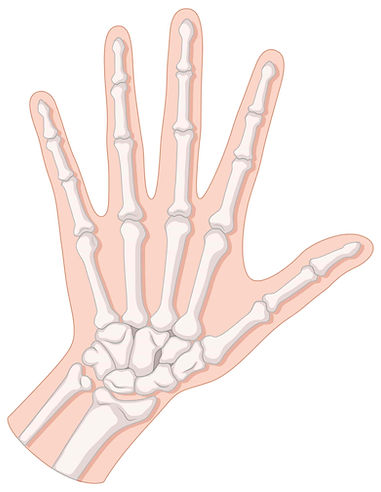
Local movement restrictions: The wrist bones (the 8 small carpal bones) and the elbow joint must move with perfect fluidity. If one of these structures loses mobility (due to an old injury, a fall or fixed postures), the entire biomechanics of the arm changes. To compensate, the surrounding muscles have to work harder, leading to rapid overload.
-
Sports and repetitive movements: Sports such as tennis, swimming, golf or weightlifting require perfect synergy between shoulder, elbow and wrist. If the shoulder is stiff or technique is not flawless, the impact of the racket on the ball or the weight of the barbell is discharged violently onto the elbow and wrist. Without adequate joint alignment, repeated mechanical stress exceeds the tendons' capacity to cope, triggering chronic pain.
What can you do for me?
-
Assess and free the cervical spine from any nerve compression, restoring the correct flow of signals to the hand and arm.
-
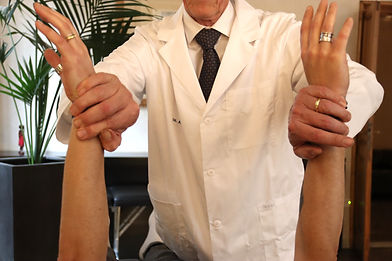
Restore specific joint mobility of the elbow and the small wrist bones through extremely gentle and precise manual adjustments.
-
Release forearm muscle contractures and relieve tendon overload through targeted myofascial techniques.
-
Provide stretching exercises and ergonomic advice to correct wrist posture during computer use or sport at home.